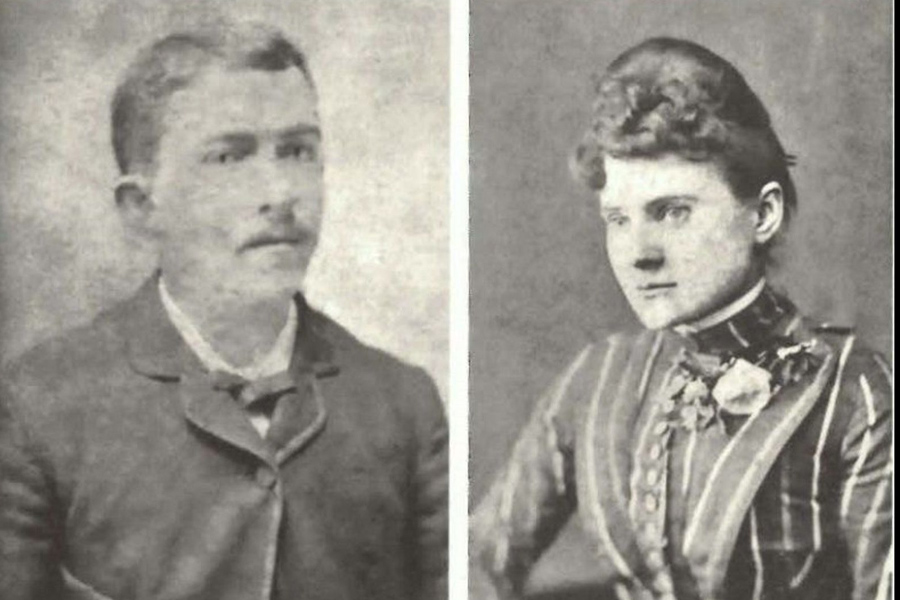
A family name that still casts a long shadow
I think of William Archibald Carter as the kind of man whose life moved like a plow through red Georgia soil: steady, forceful, and impossible to ignore. He was born on 12 November 1858 and died on 4 September 1903, yet his influence lived on through a large family line that later reached American history in a very visible way. He is remembered today not only as a farmer, mill owner, and local businessman, but also as the grandfather of Jimmy Carter. That fact alone pulls him into the wider American story, but his own life deserves attention on its own terms.
He lived in a South that was changing fast. Reconstruction had altered the political landscape, rural business was shifting, and families were rebuilding themselves through land, labor, and inheritance. William Archibald Carter belonged to that world. He was not a polished public figure. He was a working man with property, ambition, and a family network that spread across generations like tree roots under hard ground.
Origins, parents, and the older Carter line
William Archibald Carter was the son of Littleberry Walker Carter and Mary Ann Diligence Seals. I see his father as the stronger early force in the family story, a man whose death in 1873 shaped the household and left a lasting mark on the children. His mother, Mary Ann Diligence Seals, carried the family through that loss. Her name appears in family memory as part of the older Carter foundation, and she connects William to the Seals line as well.
His grandparents on the Carter side were Wiley Carter and Ann Ainsley. On the Seals side, they were William Archibald Seals and Eliza Harris. Those names matter because they show that William Archibald Carter was not a solitary figure. He came from a web of families, each branch carrying its own labor, land, and history. In family trees, those older names can look like ink on paper. In real life, they were the people who shaped customs, inheritance, and identity.
The broader family also included siblings, though the online record is not always perfectly neat. Names such as Jeremiah Calvin Carter, Annie Eliza Carter Ray, and Nannie Bell Carter Jenkins appear in family histories. That kind of spread is common in large 19th century families. Children grew up in crowded houses, where kinship was practical, not ceremonial. Brothers and sisters were co-workers, co-heirs, and sometimes co-survivors.
Marriage to Nina Pratt and the household they built
William Archibald Carter married Nina Pratt on 8 September 1885 in Abbeville, South Carolina. Nina was born on 5 December 1863 in Due West, Abbeville County. Her parents were James E. Pratt and Sophronia Caroline Cowan. She becomes one of the most important figures in the Carter story because she was the matriarch who held the family together after William’s death.
I picture their marriage as a partnership built in the practical style of the era. No grand romance needs to be invented here. Their life was about land, children, work, and survival. Nina would later become the widow who kept the family line moving after the shock of 1903. That role is easy to overlook, but it was central. In many ways, she was the bridge between the violent uncertainty of the old century and the rising future of the Carter descendants.
Children and the next generation
William and Nina had a large family, and their children carried the Carter tale. Ethel Carter Slappey, William Alton Carter, Lula Carter Fleming, James Earl Carter Sr., and Jeanette Carter are their best-known children.
Ethel Carter was born in Arlington, Georgia, on 5 February 1887. She had children after marrying Jack Linton Slappey in 1911. A daughter who took the Carter name into another family line, Ethel is the next generation’s oldest visible branch.
Uncle Buddy, William Alton Carter, was born on August 17, 1888. After working in Plains, he founded a business in 1909. He is one of the most crucial linkages between the older Carter world and the 20th-century Carter family saga.
In Arlington, Lula Carter Fleming was born on 19 May 1891. She married into the Fleming family, demonstrating how the Carter household married into adjacent families. Daughters like Lula typically marry, but they remain crucial lineage links.
On September 12, 1894, James Earl Carter Sr. was born. He was a farmer, merchant, and Georgia House representative. He is significant since he fathered President Jimmy Carter. Son James Earl Carter Sr. carried the family name into public life. He was the pivot of later Carter’s story.
Jeanette Carter is also in family documents, but her information are less consistent. Old family records can have inconsistent dates and child lists. Her participation in the family story indicates the household’s size and complexity.
Work, property, and local achievement
William Archibald Carter’s working life was built around land and industrial effort. He farmed. He ran sawmills. He owned a winery. He operated a cotton gin. That is not the profile of a man living lightly. It is the profile of a man who understood the rhythm of profit and labor in a rural economy.
I find the sawmills especially revealing. A sawmill is a machine that turns timber into value, and value into movement. It takes raw material and transforms it. That is a good metaphor for William’s life. He seems to have done the same thing with the land around him. He did not merely exist on it. He worked it into something larger.
His life also shows practical toughness. One family account describes him cutting his own leg wound with a needle and thread after an accident with sugarcane. That detail sounds almost unbelievable, but it fits the world he lived in. Men of his generation often treated pain as part of the job. They were expected to keep moving even when blood was on the ground.
By the time he settled in Rowena in 1888, he had become an established local figure. He was not famous in the national sense, but within his region he represented a kind of economic ambition built from farm acreage, milling equipment, and entrepreneurial grit.
Death, aftermath, and family legacy
William Archibald Carter died on 4 September 1903 after a violent confrontation in the Rowena area. The tragedy of his death has followed the family ever since. It is one of those occasions that transforms the emotional weather of a household. Afterward, Nina and the children relocated back toward Plains, and the family had to restructure around loss, property, and survival.
That aftermath mattered. When a patriarch dies in a household like this, the effects are not symbolic. They are financial, geographic, and emotional. Land may be sold. Children may be sent to live with relatives. A widow may become the center of decision making. William’s death did not merely end a life. It rearranged a family map.
The most renowned descendant line comes through James Earl Carter Sr., then Jimmy Carter. But the family stretches farther than that. It includes Ethel, Buddy, Lula, Jeanette, and the latter Carter grandchildren and great grandchildren who kept the name active in public memory. No bright spots in the family saga. This lantern is passed down through generations, adding light.
Why William Archibald Carter still matters
I think William Archibald Carter matters because he stands at the meeting point of private family life and public history. He was a husband, father, landworker, mill owner, and local businessman. He was also the grandfather of a future president. Those two truths should sit side by side. One does not cancel the other.
His life shows how American history is often built. Not in capitals first, but in counties. Not in speeches first, but in farms, gins, stores, and family kitchens. He was part of a world where ambition had callused hands. That world made possible the next one.
FAQ
Who was William Archibald Carter?
William Archibald Carter was a Georgia farmer, mill owner, and local businessman born in 1858 and killed in 1903. He is best known today as the grandfather of Jimmy Carter.
Who were his parents?
His parents were Littleberry Walker Carter and Mary Ann Diligence Seals.
Who was his wife?
His wife was Nina Pratt, whom he married in 1885.
How many children did he have?
He had several children, including Ethel Carter Slappey, William Alton Carter, Lula Carter Fleming, James Earl Carter Sr., and Jeanette Carter.
What did he do for a living?
He farmed and ran sawmills, a winery, and a cotton gin. He was part agrarian, part industrial, and entirely tied to the working landscape of rural Georgia.
Why is he remembered today?
He is remembered because of his role in the Carter family line, especially as the grandfather of President Jimmy Carter, and because his life reflects the rough, practical, high stakes world of late 19th century Georgia.