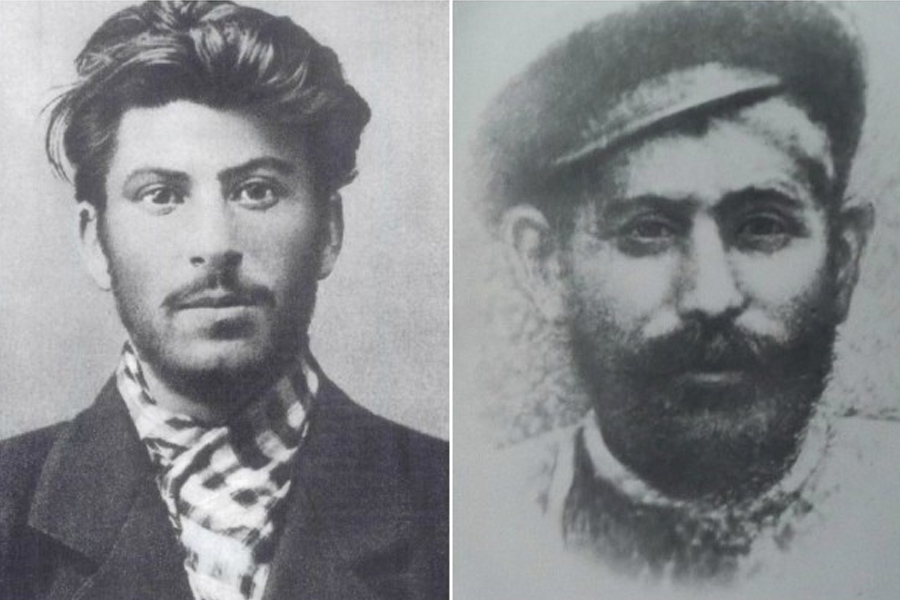
Early life and the cobbler’s hand
Besarion Jughashvili caught my attention as a rough life sketch. He was born around 1850 and worked in a leather-and-tallow-scented environment where modest instruments and patience converted raw hides into shoes. His craft was shoemaking. His trade encourages precision and punishes sloppiness. The cobbler’s daily measure was quiet dignity.
He opened store in Gori, a military town where soldiers’ footwear were thin and regular business equaled steady profit. Over time, the business experienced successes and retreats. Personal grief impacted his public image. He reportedly started drinking heavily after his two baby kids died. Numbers cannot completely describe how frigid the house became.
Family and personal relationships
I have tried to open the family album and read the faces. The household around Besarion was smaller than the myth that later grew around his name, but it is full of human detail.
- Ekaterine Geladze
She was his wife, known familiarly as Keke. She worked as a seamstress and carried the household responsibilities when money tightened. After her husband left domestic life, she became the single steady hand, insisting that her youngest son receive an education. Her determination is the spine of the family story. - Ioseb Jughashvili
The surviving son, born 6 December 1878. He was small then, a child whose name would later change the face of the world. The boy’s early years were shaped by scarcity, strict discipline, and the memory of loss. - Mikheil Jughashvili
Born 14 February 1875 and died in infancy. His brief life altered the family in ways that reverberated. - Giorgi Jughashvili
Born 24 December 1876 and died in infancy in 1877. Another absence that left a mark. - Vano Jughashvili
Besarion’s father, the previous generation of peasant life, a presence in the background of a household shaped by rural roots. - Yakov Dzhugashvili
A grandson who would later be known in his own right, born into a family whose fortunes and tragedies extended across decades. - Konstantin Kuzakov
A later, disputed figure tied into the wider family lore. His claimed ties illustrate how family stories fracture into contested fragments.
The family was small in number but large in gravity. I sense the household as a loom where patterns of thrift, loss, and stern expectations were woven together.
Career, finances, and the working life
Being a craftsman wasn’t glamorous for Besarion. He apprenticed and owned a shop. His firm was successful when he employed multiple people. When trade slowed, the family suffered. The numbers tell part of the story. By 1890, his shop shrank. His life ledger concluded in 1909.
He has little public accomplishments. He wins minor victories like well-made shoes, a youngster sent to school against the odds, and supporting a family through suffering. History often downplays those minor things.
Places that frame a life
- Gori
The town where the shop stood and where the family lived, a military market town with dusty streets. - Tbilisi
The regional center and the place where larger forces and institutions were felt, including medical care and administrative records. Besarion died in 1909 in the region that includes Tbilisi.
Timeline of key dates and events
I like tables when I want facts to stand upright and be counted. Here is a compact timeline.
| Year or Date | Event |
|---|---|
| c. 1850 | Birth of Besarion Jughashvili |
| 14 Feb 1875 | Birth of son Mikheil (died in infancy) |
| 24 Dec 1876 | Birth of son Giorgi (died in infancy 1877) |
| 6 Dec 1878 | Birth of son Ioseb (later Joseph Stalin) |
| 1870s to 1890s | Operated a shoemaking business in Gori |
| Late 19th century | Reported domestic troubles and marital separation |
| 25 Aug 1909 | Death of Besarion |
These dates are small anchors. Around them, lives moved in larger currents.
The character sketch I carry
If I had to paint him in a single stroke, I would say he was a craftsman who made a living by hand, a man who at times was undone by private grief. The artisan’s patience sat beside a temper that could harden when hope was thin. He was not monumental in public biography, but he was monumental in consequence, because a household he left behind shaped the formation of a son who would reshape history.
I think of Besarion like a root beneath a tree. The root itself is seldom seen, but it determines the reach and the shade.
FAQ
Who was Besarion Jughashvili?
I describe him as a Georgian shoemaker born around 1850, a husband and father who lived and worked in Gori. He ran a shoe shop, experienced both modest prosperity and decline, and died in 1909.
Who were his immediate family members?
His wife was Keke, born Ekaterine Geladze. He had three sons, two of whom died in infancy, and the third, born 6 December 1878, survived into adulthood and later became a prominent historical figure. His father was Vano Jughashvili. Later generations included grandchildren such as Yakov.
What was his occupation and financial standing?
He was a cobbler who at times ran a small shop with employees. Financial fortunes varied. The household relied on the combined incomes of the cobbler and his wife, with the wife often working as a seamstress to supplement the family income.
Did his family suffer tragedies?
Yes. Two infant sons died, and those losses profoundly affected the family dynamic. Reports suggest that grief contributed to domestic strain and to Besarion’s heavy drinking in later years.
Where and when did he die?
He died on 25 August 1909 in the region around Tbilisi.
Are there disputed family claims?
Yes. Later names and claimants appear in family lore. There are disputed figures who surface in later decades, which complicates the family record.
What is the lasting significance of his life?
I see his lasting significance in human terms. He was the parent who, by action and by absence, helped shape the environment that produced a consequential son. His life is a reminder that ordinary hands can set the stage for extraordinary historical outcomes.