A life built in law and service
When I look at Jerome Polaha, I see a man whose life was shaped less by noise and more by structure. His public story begins far from the courtroom, in Pennsylvania, then moves through military service, higher education, and the long, disciplined climb of legal practice. He served in the U.S. Air Force, studied Russian at Syracuse University, graduated from the University of Nevada in 1964, and earned his law degree from George Washington University in 1968. That path already tells me a great deal. It suggests patience, stamina, and the kind of mind that can hold both detail and duty in the same hand.
Before he became a judge, Jerome Polaha worked as an associate at Breen and Young, helped start the Washoe County Public Defender’s Office in 1969, and later practiced privately for many years. He also taught criminal law at Old College School of Law and served on the faculty of the National Judicial College. Those roles form a career ladder, but they also form a map. He was not simply a lawyer who arrived at the bench. He was someone who moved through the legal world like a carpenter through a workshop, learning the grain of every tool.
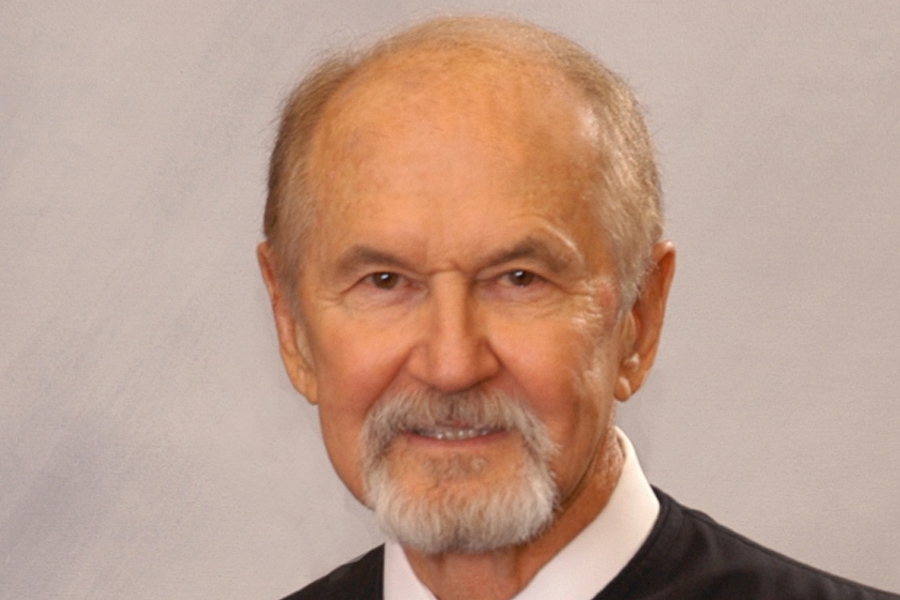
In March 1999, Governor Kenny Guinn appointed him to the Second Judicial District Court, Department 3. That appointment marked the center of his public career. He remained on the bench for years, later becoming a senior judge after retirement. The arc matters. It tells me his career was not built on spectacle, but on persistence, repetition, and trust. Judges live in the architecture of rules, and Jerome Polaha appears to have spent decades helping support that architecture.
A judge with visible impact
Jerome Polaha’s work was not locked in files. Abuse and violent criminal sentencing rulings were publicized under his name. His cases included guardianship abuse, school sex offense sentence, and murder. In bad weather, the bench became a lighthouse. He helped turn claims into record, record into judgment, and judgment into consequence.
He served as a judge outside the courtroom. He influenced professional standards as a Nevada Judicial Discipline Commission member and legal educator. He was Nevada District Court Judges’ Association president in 2009–2010. That post normally goes to someone peers admire for legal skill and stability. A judge’s reputation is often developed like stone steps—carefully placed.
His judicial education was also noted. An advanced and distinguished judicial education award and hundreds of hours of continuing education are listed in public documents. That shows he was involved in a field where knowledge must evolve or become brittle. He did more than sit. He maintained blade sharpness.
Family ties that extend across generations
The family story around Jerome Polaha is especially striking because it spreads across generations and public life. He is best known publicly as the father of Kristoffer Polaha, the actor and author. Their connection is one of the clearest family threads in the public record. Jerome is also identified as the spouse of Esther Polaha, who appears as the mother of Kristoffer in public biographies.
Kristoffer Polaha stands out as the most visible member of the next generation. He is an actor, author, and father himself. Public biographies describe him as one of four brothers, naming Erik Polaha, Michael Polaha, and John or Jon Polaha as his siblings. That means Jerome’s family is not just a single line running forward. It is more like a branching tree, with limbs reaching into different fields and different forms of public identity.
Kristoffer married Julianne Morris Polaha in 2003. She is an actress, and together they have three sons. Their names that appear in public life include Caleb, Micah Max, and Jude Polaha. With those grandchildren, Jerome’s family story becomes layered. He is not only a judge and father. He is also a grandfather whose name sits near the roots of a family now visible in entertainment, sports, and social media.
Caleb Polaha appears in public as a musician and creative figure. He has described growing up in a family of artists, and that phrase feels apt. It suggests a household where expression was not a luxury but a climate. Micah Max Polaha appears in public as an actor, director, and writer. Jude Polaha has shown up in youth sports and also in an acting debut tied to a school project. The children’s public paths are different, but together they create a family portrait with motion in it. The Polahas seem to move through the world with different instruments, yet the same underlying rhythm.
Esther Polaha and the private center of the family
Jerome’s family center is Esther Polaha. She is often seen with Jerome and Kristoffer, but that doesn’t diminish her function. Family histories often focus on lesser-known figures. I see Esther as a quiet center that guides the family’s public life.
When a family has lawyers, filmmakers, writers, musicians, and athletes, someone has held the tent up in the wind. Esther implies that presence. Public records are scarce, yet they can cast a long shadow. Her name appears in family identity descriptions, indicating prominence.
Public reputation, work, and personal imprint
Jerome Polaha’s career and family life together suggest a man whose identity was built from discipline and continuity. Judges often become known for the rules they apply, but in Jerome’s case I also see a larger human pattern. He appears to have been a military man, a student, a lawyer, a teacher, a public servant, and a father. Those are not separate costumes. They are layers of one coat worn over time.
Financially, public payroll records show a substantial judicial salary and benefits package in the last years of his service. That is no surprise for a long-serving district judge, but it helps place him in the practical world where public service meets public compensation. He was part of the machinery of government, and that machinery has numbers attached to it.
What makes Jerome Polaha interesting to me is that his life bridges visible authority and private inheritance. In the courtroom, he carried the weight of law. In the family, he carried something more intimate, the weight of being a father and grandfather in a family that later became publicly recognizable. His story is not flashy. It is steady, like a metronome heard through a wall.
FAQ
Who is Jerome Polaha?
Jerome Polaha is a Nevada judge and attorney whose public career included work as a lawyer, educator, and district court judge in Washoe County. His professional life stretched across decades and included legal practice, public defense work, teaching, and service on the bench.
Who is Jerome Polaha’s spouse?
Jerome Polaha’s spouse is Esther Polaha. She appears in public family references as the mother of Kristoffer Polaha and as a central family connection in Jerome’s personal life.
Who is Jerome Polaha’s best known child?
His best known child is Kristoffer Polaha, who is an actor and author. Public biographies identify Kristoffer as Jerome and Esther Polaha’s son.
How many grandchildren are associated with Jerome Polaha in public sources?
The public family story most often points to three grandchildren, Caleb Polaha, Micah Max Polaha, and Jude Polaha. These names appear in connection with Kristoffer Polaha and Julianne Morris Polaha.
What was Jerome Polaha’s main career achievement?
His main achievement was a long judicial career in Nevada, including his appointment to the Second Judicial District Court in 1999 and his later role as a senior judge. He also contributed to legal education and judicial leadership.
Did Jerome Polaha have work outside the courtroom?
Yes. He helped start the Washoe County Public Defender’s Office, practiced privately, taught criminal law, and served on judicial and professional boards. His career was broader than a single bench assignment.
What makes Jerome Polaha notable beyond law?
He is notable because his family extends into public life through Kristoffer Polaha, Julianne Morris Polaha, and the next generation of children and grandchildren. His story joins legal service with a wide family footprint.
Is Jerome Polaha still active in public life?
Public references indicate that he continued as a senior judge after retirement and remained a point of interest in legal and family-related coverage.