Stepping Into Her World
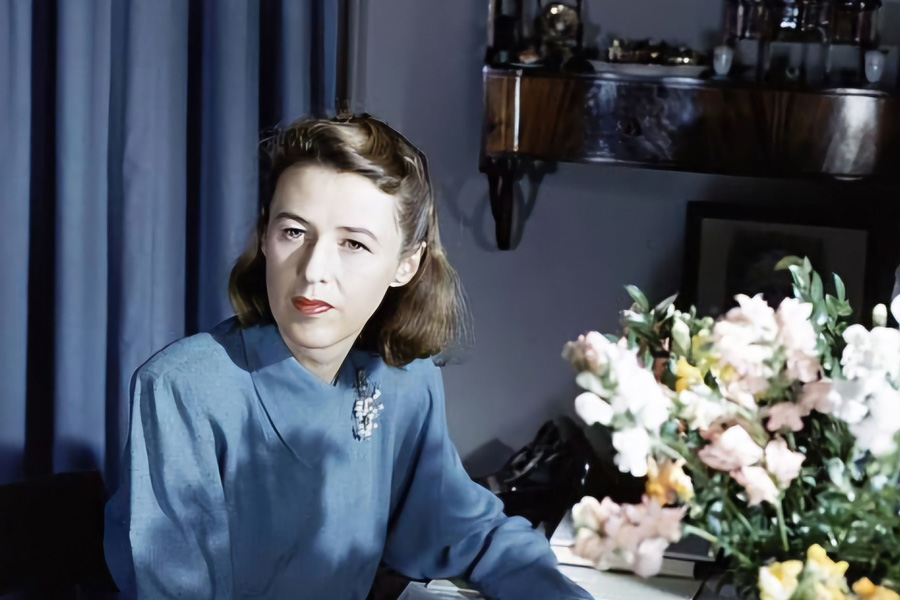
I have always found certain lives magnetic. They pull you in with quiet power. Mary Benedict Cushing stands out in that way. Born on January 27 1906 in Baltimore Maryland she grew up to become a socialite philanthropist and art collector whose presence lit up elite circles for decades. She lived until November 4 1978 passing at age 72 in her Manhattan home. Her story unfolds like a carefully composed painting. Each layer reveals family bonds artistic passion and a commitment to service that defined an era.
From the start her path intertwined with remarkable people. She spent her early years in Baltimore then moved with the family to Brookline Massachusetts. Those childhood homes buzzed with the energy of her father’s groundbreaking work. Yet Mary Benedict Cushing carved her own space. She moved to New York City as a young woman. There she studied painting and dabbled in writing for magazines. Those creative sparks never fully faded. Instead they fueled a lifelong love of beauty and culture.
The Cushing Family Foundation
Family anchored Mary Benedict Cushing’s life. It looks like a strong oak tree with deep roots and spreading branches. Her parents were central. Her father was neurosurgical pioneer Harvey Williams Cushing. Brain surgery went from dangerous to precise under his guidance. He lectured at Yale and Harvard and created publications that guide doctors. Her mother Katharine Crowell Cushing ran the household. She raised five children while supporting her husband’s demanding work. Later, their East Hampton summer home held key family functions.
Five siblings made a dynamic mix. Two brothers were discreet. Around 1904, William Harvey Cushing came. He was in Baltimore and Brookline family records. Around 1911, Henry Kirke Cushing followed. Census records place him in the same family during his youth. In the shadow of their famous father, the brothers avoided the social spotlight that eventually engulfed the sisters.
The three daughters shined together. Mary Benedict Cushing, the oldest daughter, was poised. Her 1908 sister Betsey Cushing Roosevelt Whitney married political royalty and then publishing power. She glided through Washington and New York. The youngest Babe Paley born in 1915 captivated audiences. Her marriages to Stanley Grafton Mortimer Junior and CBS’s William S. Paley made her famous. Three sisters became known as the Cushing sisters. They represented mid-20th-century American elite society. Their elegance and clever alliances opened openings.
To capture the family connections clearly here is a simple table of key relatives.
| Relationship | Name | Birth Year | Notable Role |
|---|---|---|---|
| Father | Dr Harvey Williams Cushing | 1869 | Pioneering neurosurgeon professor at Harvard and Yale |
| Mother | Katharine Crowell Cushing | Not specified | Household anchor mother of five |
| Brother | William Harvey Cushing | Around 1904 | Family member lower public profile |
| Brother | Henry Kirke Cushing | Around 1911 | Family member lower public profile |
| Sister | Betsey Cushing Roosevelt Whitney | 1908 | Socialite married to James Roosevelt II and John Hay Whitney |
| Sister | Babe Paley | 1915 | Iconic socialite married to Stanley Grafton Mortimer Jr and William S Paley |
| First Husband | Vincent Astor | 1891 | Astor family heir real estate leader philanthropist |
| Second Husband | James Whitney Fosburgh | 1910 | Painter art collector White House advisor on art |
No children came from Mary Benedict Cushing’s marriages. That fact adds a layer of poignancy. Her legacy flowed instead through influence and shared passions.
Marriages That Shaped Her Path
Love and partnership played pivotal roles. On September 27 1940 Mary Benedict Cushing married Vincent Astor. The ceremony took place privately at her mother’s East Hampton estate. He brought the vast Astor fortune and real estate empire into her life. Their time together lasted until September 19 1953 when they divorced in Bannock Idaho. Weeks later on October 23 1953 she wed James Whitney Fosburgh in North Hempstead New York. He was a painter art historian and advisor to Presidents Kennedy and Johnson on paintings. Their union lasted until his death in April 1978. She followed months later.
Each marriage opened new doors. The first connected her to one of America’s wealthiest families. The second deepened her artistic world. I picture those relationships as bridges. They linked her to greater resources and shared dreams.
Philanthropy Career and Artistic Achievements
Mary Benedict Cushing never worked a 9-to-5. Instead, she supported important causes. She chaired the WWII Ship Service Committee. New York welcomed Allied naval men. The New York City War Fund’s women’s branch was led by her. Those efforts raised significant war funds. Numbers don’t reveal everything. Her work affected people personally. It aided troops and families in need.
Cultural institutions were her postwar focus. Metropolitan Museum of Art trustee. New York City Center board member. She backed Yale Art Gallery. Her schedule was full with American National Theater and Academy and Henry Street Settlement fundraising. She chaired settlement nurse service drives.
Art remained her solitary love. With James Whitney Fosburgh, she made a great collection. It featured Paul Cezanne, Pierre Auguste Renoir, Winslow Homer, William Nicholson, Walter Sickert, and Pavel Tchelitchew They displayed artworks in their Manhattan home at 32 East 64th Street. Some later works enriched public museums. She made ripples in philanthropy and art. Long after her time, they shaped civilization.
An Extended Timeline of Key Moments
Timelines bring clarity to any life story. Here are the milestones that defined Mary Benedict Cushing presented in order.
1906 January 27 birth in Baltimore Maryland
1910s to 1920s childhood documented in Baltimore and Brookline Massachusetts
1930s move to New York City to study painting and enter social circles
1940 September 27 marriage to Vincent Astor in East Hampton New York
1940s wartime leadership of Ship Service Committee and New York City War Fund
1953 September 19 divorce from Vincent Astor
1953 October 23 marriage to James Whitney Fosburgh in North Hempstead New York
1950s to 1970s service on boards of Metropolitan Museum of Art New York City Center and Yale Art Gallery plus major art collection building
1978 April death of second husband James Whitney Fosburgh
1978 November 4 her own passing in Manhattan after a long illness burial in Lake View Cemetery Cleveland Ohio
These dates form a clear arc. They show steady progression from family roots to public service to cultural legacy.
Legacy Echoes in Art and Society
Her influence lingers in subtle ways. The Cushing sisters collectively shaped perceptions of elegance and power. Mary Benedict Cushing’s focus on institutions and collections added depth. She supported theater settlement houses and museums with dedication. Her story reminds me that true impact often hides behind graceful exteriors. It thrives in boardrooms galleries and quiet acts of giving.
FAQ
Who were the parents of Mary Benedict Cushing?
Her father was Dr Harvey Williams Cushing the pioneering neurosurgeon known as the father of the field. Her mother was Katharine Crowell Cushing who managed the family home and supported five children through years of professional demands.
How many siblings did Mary Benedict Cushing have and who were they?
She had four siblings. Brothers William Harvey Cushing and Henry Kirke Cushing kept lower profiles. Sisters Betsey Cushing Roosevelt Whitney and Babe Paley became famous socialites. The three daughters formed the celebrated Cushing sisters trio.
What were the two marriages of Mary Benedict Cushing?
She first married Vincent Astor on September 27 1940. They divorced on September 19 1953. Her second marriage to James Whitney Fosburgh took place on October 23 1953 and lasted until his death in 1978.
Did Mary Benedict Cushing have any children?
No she had no children from either marriage. Her legacy instead centered on philanthropy art and family influence.
What were her main philanthropic contributions during World War II?
She chaired the Ship Service Committee for Allied naval personnel in New York. She also led the women’s division of the New York City War Fund raising vital funds for the effort.
Which cultural institutions did she support in later years?
She served as trustee for the Metropolitan Museum of Art and the New York City Center. She sat on the board of the Yale Art Gallery and raised money for theater groups and settlement house nursing services.
What kind of art collection did Mary Benedict Cushing build?
Together with her second husband she gathered works by masters including Paul Cezanne Pierre Auguste Renoir Winslow Homer and others. The collection reflected their shared passion and later enriched public institutions.